How to Treble Crochet (tr) and the Taller Stitches
Treble crochet, also called triple crochet, is the tallest of the basic stitches most patterns use. It builds height quickly and creates open, lacy fabric. Once you understand it, double treble and beyond are just more of the same.
3 min readPublished Updated
This profile is a development placeholder, not a real person, and claims no credentials. See our contributors.
The short version
- Treble crochet starts with two yarn overs, then you work off loops two at a time, three times.
- On a foundation chain, start in the 5th chain from the hook.
- The ch-4 turning chain usually counts as the first stitch.
- UK patterns call this stitch a double treble (dtr).
What treble crochet is good for
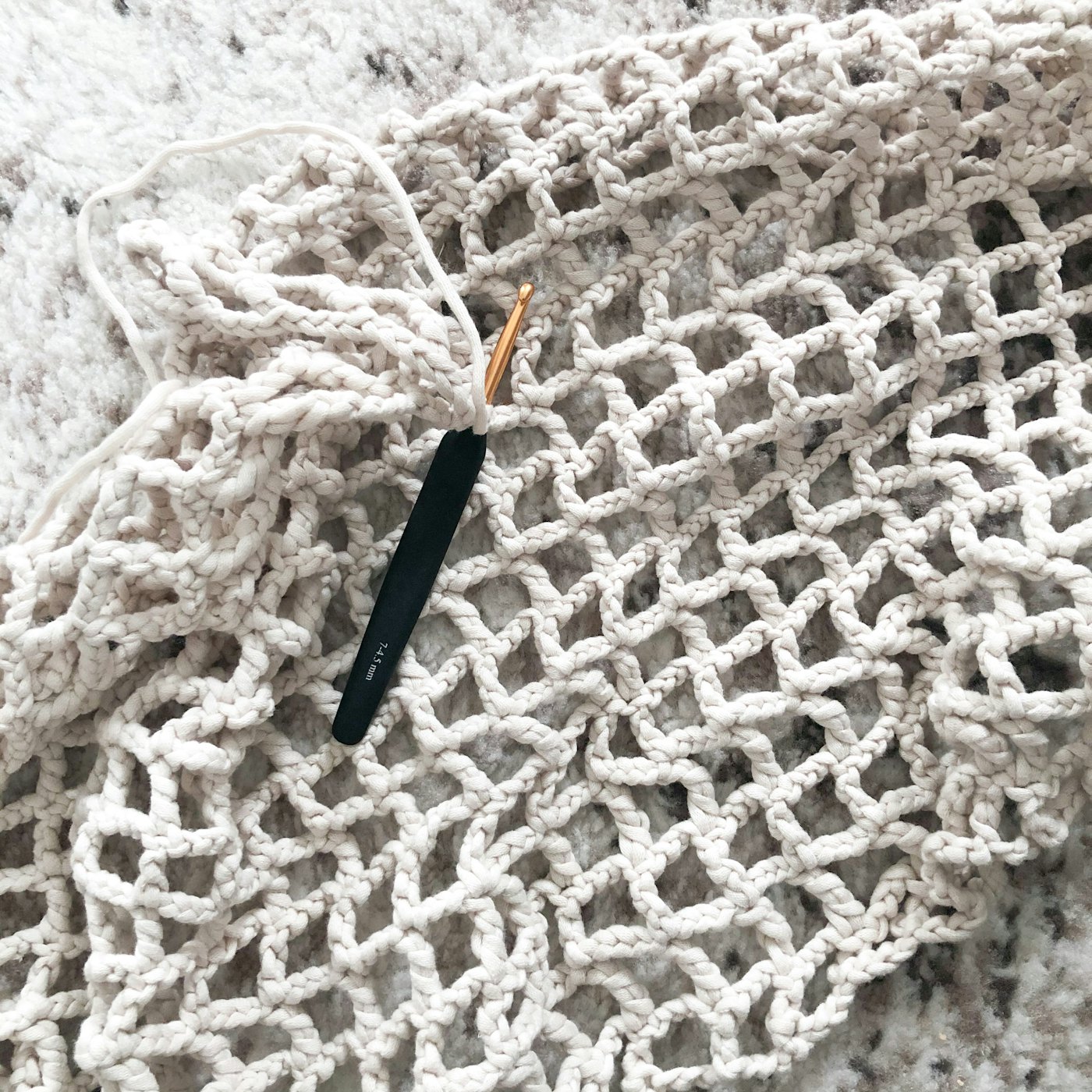
Treble crochet (tr), also called triple crochet, is a tall stitch, roughly the height of four chains. A row of trebles adds a lot of height at once and leaves open space between stitches.
That makes it great for:
- Lacy shawls and summer tops
- Mesh and filet-style fabrics
- Big shells and fans
- Quickly adding length to a light blanket or wrap
For something warm and solid, use a shorter stitch. Trebles are about airiness and drape.
Treble crochet, step by step
- 1.Yarn over twice, wrapping the yarn around the hook two times.
- 2.Insert the hook into the stitch.
- 3.Yarn over and pull up a loop. You now have 4 loops on the hook.
- 4.Yarn over and pull through 2 loops. Three loops remain.
- 5.Yarn over and pull through 2 loops. Two loops remain.
- 6.Yarn over and pull through the last 2 loops. One loop remains, and the treble is done.
Notice the pattern: every extra yarn over at the start adds one more "pull through two" at the end. That's how all the taller stitches work.
Starting and turning
On a foundation chain, work your first treble into the 5th chain from the hook. The four skipped chains count as the first stitch.
At the end of each row, chain 4 and turn. The ch-4 usually counts as the first treble, so:
- Skip the first stitch and work the next treble into the second stitch.
- Work the last treble of the following row into the top of the ch-4.
Tall turning chains can look loose. If yours do, chain 3 instead of 4, but keep it consistent on every row.
Keeping tall stitches neat
Tall stitches magnify small differences in tension, so a few habits help:
- Keep the two yarn overs loose. If they're tight, you'll struggle to insert the hook and the stitch will look pinched.
- Pull up the first loop to the right height, level with the neighbouring stitches. Pulling it up too short makes squat, uneven trebles.
- Work loops off evenly. Rushing the last "pull through two" creates a tight knot at the top.
- Block the finished piece. Lacy treble fabric really opens up and evens out with blocking. See our blocking lesson.
Going taller: double treble and beyond
Need more height? Add another yarn over at the start:
| Stitch (US) | Yarn overs to start | Loops on hook after pulling up | "Pull through 2" steps | UK name |
|---|---|---|---|---|
| Double crochet (dc) | 1 | 3 | 2 | Treble (tr) |
| Treble crochet (tr) | 2 | 4 | 3 | Double treble (dtr) |
| Double treble (dtr) | 3 | 5 | 4 | Triple treble (trtr) |
| Triple treble (trtr) | 4 | 6 | 5 | Quadruple treble (qtr) |
The turning chain grows by one each time too: ch 5 for double treble, ch 6 for triple treble. Patterns will tell you exactly what they expect.
Where you'll see trebles in patterns
- Shells: several trebles worked into one stitch fan out into a big scallop.
- Clusters: several partial trebles finished together at the top, written like
tr3tog. - Mesh:
tr, ch 2, skip 2repeated makes a grid of open squares. - Edging: a row of trebles makes a quick, airy border on a shawl.
If a pattern uses a stitch taller than treble, the special abbreviations section at the top will explain it.
Questions crocheters ask
Yes. "Treble" and "triple" crochet are two US names for the same stitch, abbreviated tr.
Related Crochet Calculators & Converters
Related Educational Guides & Tutorials
US vs UK Crochet Terms: Conversion Chart and How to Tell Them Apart
A UK double crochet is a US single crochet. Here's the full conversion chart, why the systems differ, how to spot which one a pattern uses, and how to convert without mistakes.
How to Read a Crochet Pattern: The Complete Guide
Every part of a crochet pattern explained, from skill levels and multiple sizes to repeats, stitch counts, shaping language, charts and schematics, plus what to do when something seems wrong.