Color & Generators
Temperature Blanket Generator
Plan a temperature blanket: set your expected temperature range, choose how many colors to use, and get evenly spaced temperature brackets with a color for each.
Temperature Blanket Color Scale Generator
1. Lowest TemperatureColdest Day
°F
2. Highest TemperatureHottest Day
°F
3. Color Scale & Bands8 Bands
Full Year Temperature Spectrum:
20°
29°
39°
48°
58°
67°
76°
86°
Printable Temperature Blanket Legend (8 Color Brackets)
20° - 28°FDeep Violet#3B0954
29° - 38°FNavy Blue#1D3557
39° - 47°FCyan Blue#457B9D
48° - 57°FSky Turquoise#A8DADC
58° - 66°FPale Olive#9CA986
67° - 75°FButter Yellow#E9C46A
76° - 85°FApricot#F4A261
86° - 95°FBrick Red#C0392B
365-Day Blanket Year Simulation (Jan → Dec):1 stripe = 1 calendar day
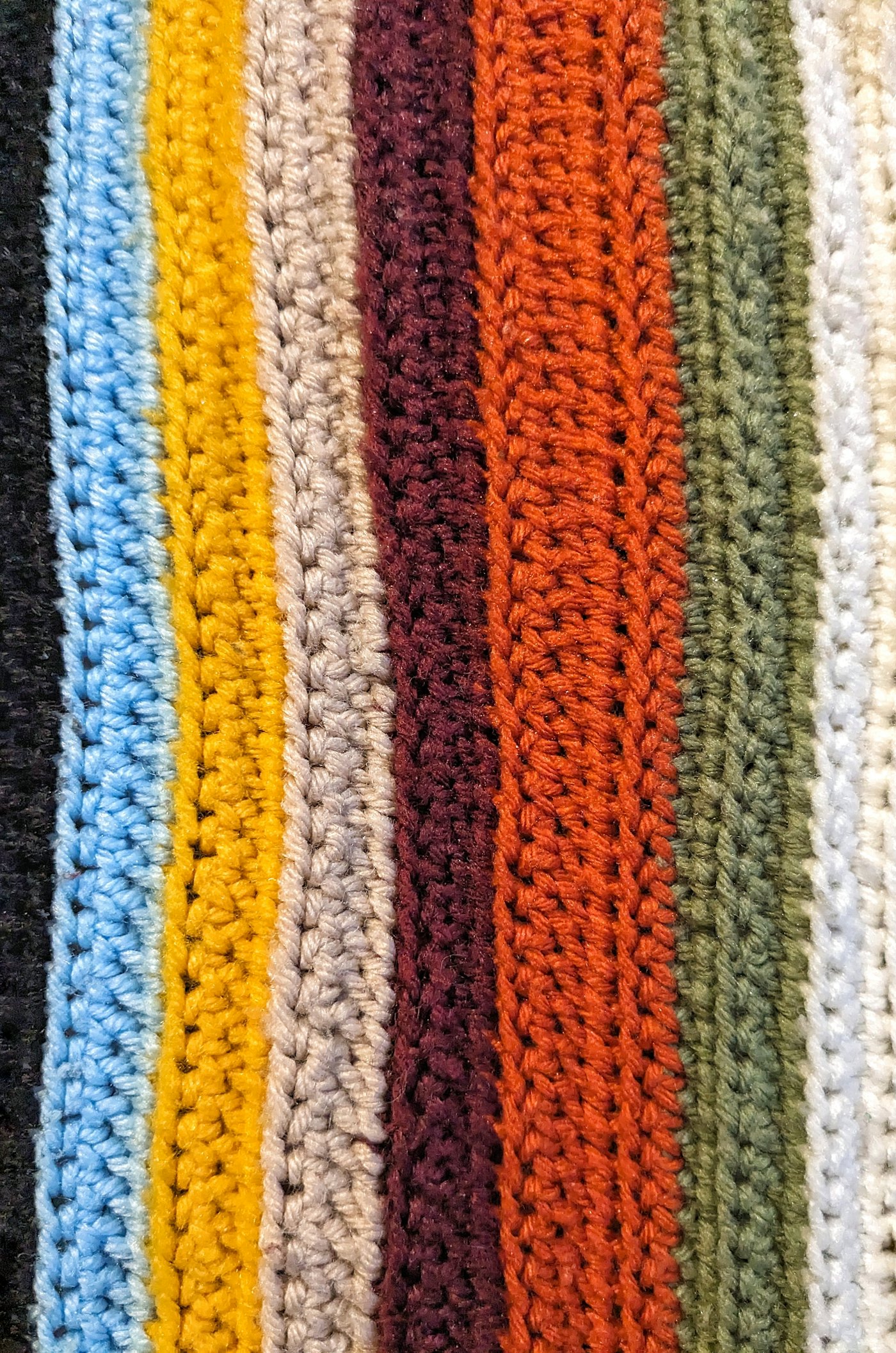
The 365-Row Danger: 365 rows of standard double crochet will create a blanket that is over 10 feet (3 meters) long! For manageable proportions (~60 to 75 inches), use short stitches like Moss Stitch (Single crochet + chain 1) or single crochet with a sport/DK yarn.
How to use the temperature blanket generator
- Row 1Choose Fahrenheit or Celsius.
- Row 2Enter the lowest and highest temperatures you expect over the year where you live.
- Row 3Choose a color palette and how many colors (temperature brackets) to use.
- Row 4Note the temperature range assigned to each color, and use the simulated year preview to get a feel for the finished look.
How a temperature blanket works
A temperature blanket records a year of weather. Each day you crochet one row (or one square or round) in the color matching that day's temperature, usually the high, though some people use the low or the average. By the end of the year, the blanket is a striped picture of the seasons.
The generator divides your temperature range into equal brackets, one per color. With a range of 20–95 °F and 8 colors, each color covers about 9 to 10 degrees.
Planning the yarn
A row-a-day blanket has 365 rows (366 in a leap year), so plan the size around that:
- Shorter stitches like single crochet make a very long blanket over 365 rows, so many people use a narrow width or a taller stitch.
- Some makers work two rows per day (high and low temperature), which doubles the length, so it suits short rows or a smaller stitch.
- Others make one granny square or hexagon per day and join them at the end.
Each color's yarn depends on how many days fall in its bracket, which depends on your local climate. Buy one or two balls of each color to start, and top up as the year goes on. Look up your area's typical yearly highs and lows from a weather service to set the range, rather than guessing.
Choosing colors
Temperature blankets work best with colors that run in a clear sequence from cold to hot, for example violets and blues through greens and yellows to oranges and reds. Make sure neighboring colors have enough contrast to tell apart, especially in the middle of the range where most days fall.
Our color palette generator can help you build a custom range, and the yarn calculator estimates the total yardage for your blanket's size.
The formula
Bracket width = (maximum temperature − minimum temperature) ÷ number of colors. Each color covers one bracket, from the lowest temperature upward.
Tips
- Keep a simple log of each day's temperature, so you can catch up if you miss a few days.
- Decide in advance whether you'll use the daily high, low or average, and stick to it.
- Set your range a few degrees beyond your area's usual extremes to allow for unusual days.
- Add a month-marker row in a neutral color, or a different stitch, to make the blanket easier to read.
Temperature Blanket Generator FAQ
Most use 8 to 12 colors. More colors make finer temperature steps; fewer make bolder stripes.
In-depth guides
 Yarn8 min read
How Much Yarn for a Crochet Blanket? Chart and 3 Ways to Estimate
A full yardage chart for every blanket size, what changes the numbers, and three ways to estimate, including a swatch method that's accurate to within a few percent.
Read guide Crochet Techniques6 min read
How to Fix Uneven Crochet Edges and Keep Them Straight
Almost every wobbly edge comes from the first and last stitch of each row. Learn the turning chain rules, the fixes for gappy edges, and how to tidy a finished piece with a border.
Read guide
Related Crochet Calculators & Converters
Yarn
Yarn Calculator
Estimate total yardage, meters, and skein count needed for blankets, scarves, sweaters, and shawls.
Open Calculator
Project Size
Blanket Size Calculator
Standard blanket dimensions (Baby to King), estimated rows, stitches, and yardage requirements.
Open Calculator
Color & Generators
Crochet Color Palette Generator
Generate harmonious yarn color palettes for blankets, granny squares, and striped garments.
Open Calculator