Inspiration
Minimalist Crochet: Clean Lines, Texture and Calm Colors
How to make crochet that looks calm and considered, using texture, neutral colors and simple shapes.
3 min readPublished Updated
This profile is a development placeholder, not a real person, and claims no credentials. See our contributors.
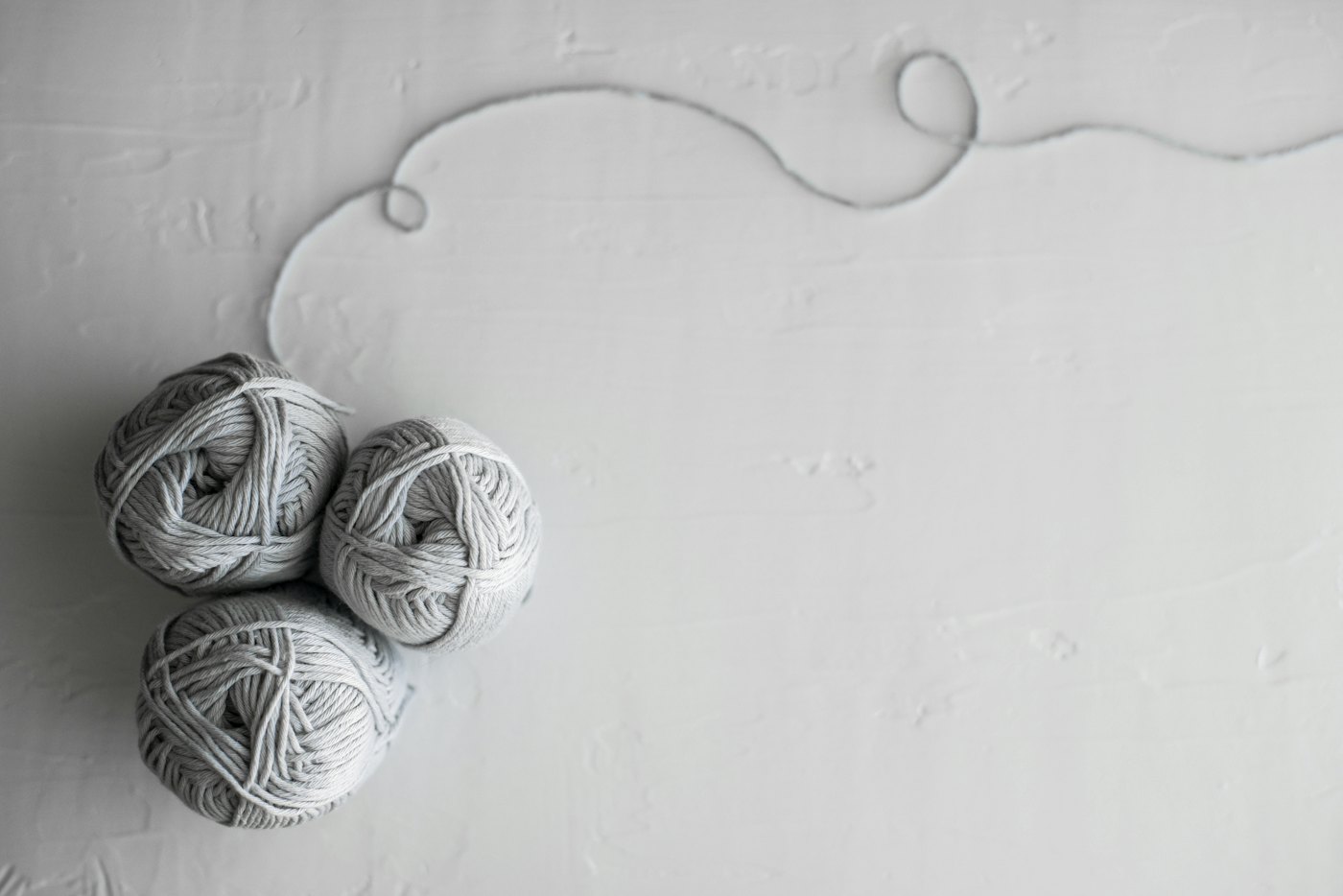
Minimalism in crochet isn't about being plain. It's about removing everything that doesn't need to be there, so the things that remain, the texture, the fiber and the shape, get your full attention.
It's also a very forgiving style to learn. Minimalist projects are usually worked in one stitch and one or two colors, so they're relaxing to make and easy to get right.
Start with a neutral palette
Minimalist crochet usually lives in a tight palette:
- Monochrome: black, charcoal, grey and white, like the palette above.
- Warm neutrals: oatmeal, sand, camel and cream.
- Tonal: several shades of a single color, such as three blues from dark to light.
Pick one main color and use the others sparingly. A grey blanket with a single white stripe near one end is more minimalist than one with even stripes of every shade.
Choose a stitch with texture
With so little color, the stitch is the design. Look for stitches that create an even, regular texture:
- The moss (linen) stitch: single crochet and chain 1, offset row to row, for a flat, woven-looking fabric.
- Back-loop-only single crochet: neat horizontal ridges.
- Third-loop half double crochet: a ridged texture that resembles knitting. See our half double crochet lesson.
- Post-stitch ribbing: clean vertical lines.
Make a swatch of two or three, in your actual yarn, before you decide. The same stitch can look completely different in cotton and in wool.
Keep shapes simple
Rectangles, squares, tubes and circles. Most minimalist pieces are basic shapes made beautifully. That makes them perfect for practicing tension and finishing, because there's nowhere for mistakes to hide.
Simple shapes also make planning easy. Our gauge calculator turns your swatch into exact stitch and row counts, and the time calculator tells you how long a plain piece will take.
Finishing is everything
In minimalist work, finishing is what makes the difference:
- Straight edges. Work the first and last stitch of every row consistently. Our guide to uneven edges explains how.
- Invisible ends. Weave tails through stitches of the same color, in two directions.
- Blocking. Even a plain scarf looks more refined after blocking, because it evens out the stitches and straightens the edges. See our blocking lesson.
- Considered details. If you add a button or a label, choose one that suits the piece, such as wood, horn or leather.
Project ideas
Monochrome linen-stitch scarf
A long scarf in the moss stitch, in a single grey or oatmeal, finished with simple tassels at each end. Relaxing to make and endlessly wearable.
Yarn: DK (#3) or worsted (#4) wool
Grid pillow cover
A cream cushion with a thin charcoal grid made by working a contrast row every few inches. Changing color only at the row ends keeps it simple.
Yarn: Worsted (#4) cotton
Ribbed beanie
A classic beanie in post-stitch ribbing in a single color: the minimalist wardrobe staple. Our hat size calculator gives the right size.
Yarn: Worsted (#4) wool or wool blend
Stacking baskets
Sturdy round baskets in back-loop-only single crochet, in three neutral tones. Useful, simple and a satisfying first project in the round.
Yarn: Cotton cord or bulky (#5) cotton
Tonal throw
A throw in three shades of one color, worked in wide bands from dark to light. The gradual change gives depth without busy contrast.
Yarn: Worsted (#4) wool or acrylic
Frequently asked questions
Crochet that focuses on a limited palette, a single textured stitch, simple shapes and careful finishing, rather than many colors or motifs.
Related Crochet Calculators & Converters
Crochet Gauge Calculator
Calculate stitch density and precise rows and stitches needed for your target project dimensions.
Crochet Hat Size Calculator
Calculate crown circle diameter, total hat height, and stitches for preemie to adult sizes.
Crochet Time Calculator
Estimate how many hours and days it will take to finish your crochet project based on your stitch speed.
Related Educational Guides & Tutorials
What Is Crochet Gauge? How to Measure It and Why It Matters
Gauge is the translation key between the designer's hands and yours. Learn how to make a swatch that tells the truth, measure it, match the pattern, and use the math to size any project.
How to Fix Uneven Crochet Edges and Keep Them Straight
Almost every wobbly edge comes from the first and last stitch of each row. Learn the turning chain rules, the fixes for gappy edges, and how to tidy a finished piece with a border.